

BRI Releases Findings of Major Investigation into Stablecoins as U.S. Lawmakers Advance Landmark Crypto Legislation
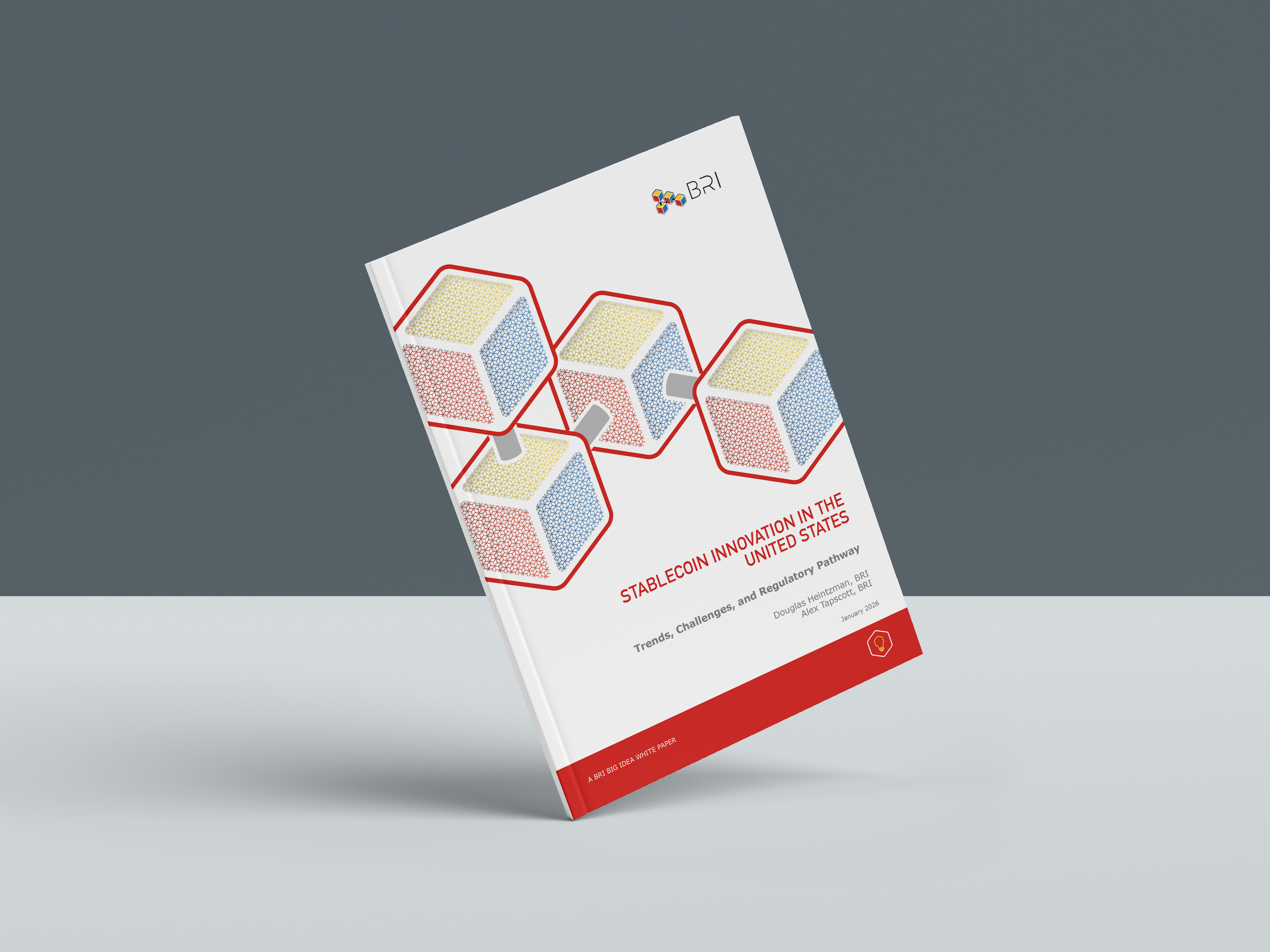
BRI Big Idea Whitepaper: "Stablecoin Innovation in the United States: Trends, Challenges, and Regulatory Pathway" by Douglas Heintzman and Alex Tapscott, with foreword by Don Tapscott.
Investigation examines stablecoins’ role in the U.S. economy, competitive risks, and the regulatory choices now facing Congress
NEW YORK, NY, UNITED STATES, January 14, 2026 /EINPresswire.com/ -- As U.S. senators convene this week for a pivotal markup on crypto market structure, the Blockchain Research Institute (BRI) today released findings of a comprehensive investigation into stablecoins and their emerging role in the U.S. economy.Led by Douglas Heintzman and Alex Tapscott, the investigation examines how stablecoins are reshaping payments, settlement, and cross-border commerce; the main policy and regulatory challenges they present; and how lawmakers could move forward in a way that strengthens U.S. competitiveness, financial stability, and consumer outcomes.
The findings arrive at a critical moment in Washington, as lawmakers debate amendments to the CLARITY Act, which seeks to define crypto market oversight, and the complementary GENIUS Act, enacted in July of 2025, which focuses specifically on stablecoins. Together, these legislative efforts could determine whether stablecoins become a durable part of U.S. financial infrastructure, or are constrained by rules designed for an earlier era.
Stablecoins are blockchain-based digital assets designed to maintain a stable value, typically through one-to-one backing with sovereign currencies such as the U.S. dollar. Unlike volatile cryptocurrencies, stablecoins are already used at scale for payments, settlement, and treasury management, moving billions of dollars each day across public blockchain networks with near-instant finality.
“Stablecoins represent a profound upgrade to the plumbing of the global financial system,” said Douglas Heintzman, Chief Catalyst at BRI. “Our research shows that when properly designed and governed, they can improve trust, dramatically increase the speed and efficiency of payments, and extend access to high-quality money at a global scale.”
The release comes amid intensified lobbying by large U.S. banks, particularly around whether stablecoin issuers should be permitted to offer interest, rewards, or other incentives to users. Banking trade groups argue that such features could accelerate deposit outflows and threaten financial stability. The investigation concludes that these concerns are frequently overstated and reflect resistance to competition rather than genuine systemic risk.
“The fight over interest on stablecoins is really a fight over competition,” said Alex Tapscott, co-author of the report and CEO of CMCC Global Capital Markets. “The three largest banks in America control nearly 40% of all deposits while offering consumers an average of just 0.4% annually. The GENIUS Act should be implemented to encourage innovation and help consumers, not entrench incumbents by making stablecoins less useful.”
Beyond the interest debate, the investigation highlights a broader strategic opportunity. Drawing on lessons from telecommunications, open banking, and other policy-guided innovations, the authors conclude that when paired with sensible regulation, stablecoins could modernize U.S. payment and settlement infrastructure, create new demand for U.S. Treasury assets, and strengthen America’s global financial position without undermining stability.
As Congress debates the final language for the CLARITY Act, the investigation frames the moment as a pivotal choice: to implement legislation in a way that fosters responsible innovation and fair competition, or to allow entrenched interests to dilute their impact.
The stakes, the authors argue, extend well beyond crypto markets, touching on U.S. economic leadership, dollar diplomacy, and the future architecture of the Internet of Value.
Read the full white paper here.
ABOUT THE AUTHORS:
Douglas Heintzman is the Chief Catalyst at BRI and has served as a policy advisor and expert witness for the European Commission and Canadian and US governments, providing guidance on technology policy, standards, and intellectual property.
Alex Tapscott is the CEO of CMCC Global Capital Markets, co-founder of BRI, and the author of "Web3: Charting the Internet’s Next Economic and Cultural Frontier."
Don Tapscott is a bestselling author of 16 books, including "Blockchain Revolution" and "You to the Power of Two" (co-authored with Joseph Bradley). He is the Executive Chairman at BRI, an Adjunct Professor at INSEAD, and Chancellor Emeritus at Trent University.
ABOUT BRI:
BRI is a global think tank investigating the transformative impact of emerging technologies on business and society. Its research, education, and advisory services inform leaders worldwide, shaping digital strategy, policy, and collaboration.
Alisa Acosta
Blockchain Research Institute
email us here
Visit us on social media:
LinkedIn
Legal Disclaimer:
EIN Presswire provides this news content "as is" without warranty of any kind. We do not accept any responsibility or liability for the accuracy, content, images, videos, licenses, completeness, legality, or reliability of the information contained in this article. If you have any complaints or copyright issues related to this article, kindly contact the author above.
