

SIM-Based Applet Market is expected to reach US$ 6.25 billion by 2033 | DataM Intelligence
SIM-Based Applet Market
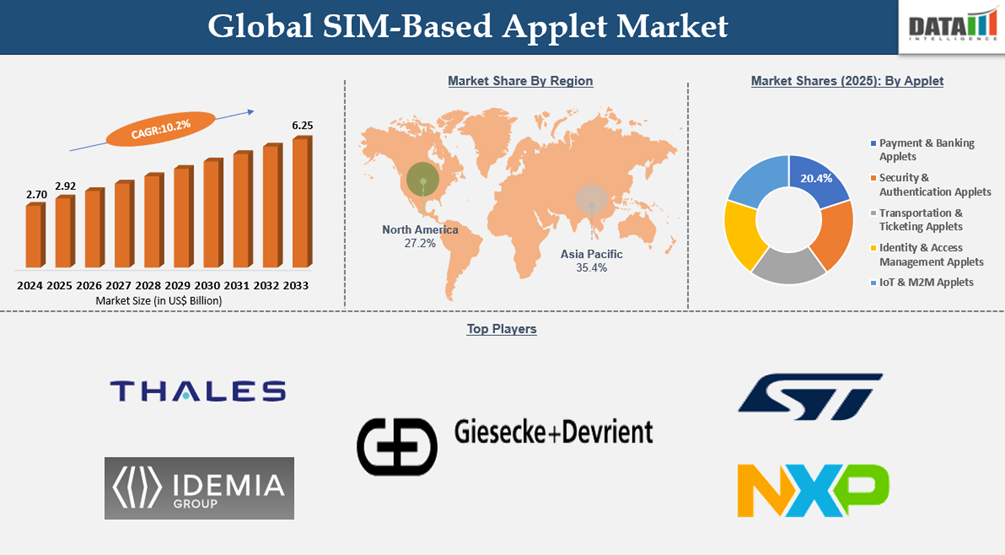
The Global SIM-Based Applet Market is expected to reach at a CAGR of 10.2% during the forecast period 2026-2033.
The SIM-Based Applet Market is growing steadily, driven by rising mobile security needs, telecom innovation, digital payments adoption, and expanding IoT-based SIM applications worldwide.”
AUSTIN, TX, UNITED STATES, February 20, 2026 /EINPresswire.com/ -- Market Overview:— DataM Intelligence
The SIM-Based Applet Market represents a crucial segment within the broader telecom and digital services ecosystem, enabling secure applications to run directly on Subscriber Identity Module (SIM) cards. These applets, built using SIM Application Toolkit (STK) or Java Card technologies, empower telecom operators, financial institutions, and service providers to deliver value-added services such as mobile banking, authentication, identity verification, mobile ticketing, and secure payments. As mobile penetration continues to expand globally and digital transformation accelerates across industries, SIM-based applets are becoming a strategic tool for secure, device-independent service deployment.
To Download Sample Report Here: https://www.datamintelligence.com/download-sample/sim-based-applet-market
According to DataM Intelligence, The Global SIM-Based Applet Market was valued at approximately USD 2.92 billion in 2025 and is projected to reach USD 6.25 billion by 2033, growing at a CAGR of 10.2% during the forecast period (2026-2033). Growth is primarily driven by the rising demand for secure mobile transactions, increasing adoption of contactless payments, and the expansion of IoT-connected devices. The payment and authentication applet segment currently dominates due to the surge in mobile wallet usage and secure digital onboarding. Geographically, Asia-Pacific leads the market, supported by large mobile subscriber bases, rapid fintech innovation, and strong telecom infrastructure expansion in countries such as China, India, and Southeast Asia.
The integration of SIM-based applets into enterprise mobility, government identity programs, and telecom-driven digital ecosystems further strengthens market momentum. With 5G deployment, eSIM adoption, and mobile-first service strategies gaining traction, the SIM-Based Applet Market is positioned for sustained long-term growth.
Key Highlights from the Report:
The Global SIM-Based Applet Market is projected to grow at a CAGR of 10.2% through 2033.
Payment and authentication applets hold the largest market share due to increasing digital transaction volumes.
Asia-Pacific dominates the market, driven by expanding telecom subscribers and fintech adoption.
eSIM integration is emerging as a transformative trend in SIM-based applet deployment.
Telecom operators remain the primary end-users, leveraging applets for value-added services.
Rising cybersecurity concerns are accelerating demand for secure SIM-based solutions.
Market Segmentation:
The SIM-Based Applet Market can be segmented based on applet type, SIM type, application, and end-user industry.
By applet type, the market includes payment applets, authentication applets, mobile banking applets, loyalty and ticketing applets, and IoT connectivity applets. Among these, payment and authentication applets account for the largest share due to growing reliance on mobile wallets and secure transaction verification. Authentication applets are widely used for two-factor authentication (2FA), secure login credentials, and enterprise-grade mobile security.
Meanwhile, IoT connectivity applets are witnessing rapid adoption as connected devices require secure identity provisioning and remote management.
Based on SIM type, the market is categorized into traditional SIM cards and embedded SIMs (eSIMs). While traditional SIMs currently hold a significant portion of the market, eSIM technology is expanding at a faster pace. eSIMs allow remote provisioning and dynamic applet updates, making them highly attractive for IoT, automotive connectivity, and enterprise mobility use cases.
In terms of application, the market spans telecom services, banking and financial services (BFSI), transportation, healthcare, retail, and government sectors. The BFSI segment leads due to increasing adoption of secure mobile banking and digital payment services. Governments are also leveraging SIM-based applets for digital ID verification and secure citizen services.
By end-user, telecom operators dominate the market as they deploy SIM-based applications to enhance customer engagement, provide subscription management, and enable secure communication channels. Enterprises and financial institutions represent growing segments, integrating SIM applets into mobile security frameworks and digital transaction ecosystems.
Speak to Our Analyst and Get Customization in the report as per your requirements: https://www.datamintelligence.com/customize/sim-based-applet-market
Regional Insights:
Asia-Pacific holds the largest share of the SIM-Based Applet Market, driven by high smartphone penetration, strong telecom network expansion, and government-backed digital initiatives. Countries such as India and China have witnessed rapid growth in digital payments and mobile banking services, creating strong demand for secure SIM-based applications. The region's dominance is further supported by large-scale 5G deployment and growing IoT connectivity.
North America represents a mature yet steadily growing market, supported by advanced telecom infrastructure and increasing enterprise adoption of secure authentication solutions. The presence of major telecom operators and fintech innovators strengthens the regional ecosystem. Additionally, rising cybersecurity threats are pushing enterprises toward SIM-based identity verification mechanisms.
Europe is also witnessing significant adoption, particularly in financial services and public sector digital identity programs. Strict data protection regulations encourage the use of secure hardware-based authentication methods, boosting demand for SIM applets.
The Middle East & Africa and Latin America are emerging markets, fueled by expanding mobile subscriber bases and increasing digital financial inclusion initiatives. Telecom operators in these regions are using SIM-based solutions to provide mobile money and secure communication services.
Market Dynamics:
Market Drivers
The primary driver of the SIM-Based Applet Market is the increasing demand for secure mobile services. As cyber threats and identity fraud cases rise globally, organizations require robust hardware-level security solutions. SIM-based applets offer encrypted communication and tamper-resistant environments, making them ideal for financial transactions and identity management. Additionally, the proliferation of smartphones and mobile internet connectivity has amplified demand for mobile-based services. The expansion of 5G networks and IoT ecosystems further accelerates the need for secure SIM provisioning and remote management capabilities.
Market Restraints
Despite strong growth prospects, the market faces certain challenges. High deployment and integration costs can limit adoption among smaller telecom operators and enterprises. Compatibility issues between different SIM platforms and device manufacturers may also hinder seamless implementation. Moreover, the gradual shift toward cloud-based authentication solutions presents competitive pressure, as some enterprises prefer software-based security models over hardware-based SIM solutions.
Market Opportunities
Significant opportunities lie in the expansion of eSIM technology and IoT integration. The automotive sector, for instance, increasingly relies on embedded SIMs for connected vehicle services. Governments worldwide are also investing in digital identity and smart city initiatives, creating opportunities for SIM-based secure applications. Furthermore, the integration of blockchain with SIM applets for decentralized authentication systems could unlock new growth avenues. Emerging markets with rising mobile penetration present untapped potential for telecom operators and service providers.
Looking For Full Report? Get it Here: https://www.datamintelligence.com/buy-now-page?report=sim-based-applet-market
Frequently Asked Questions (FAQs):
How Big is the SIM-Based Applet Market in 2026?
What is the Projected Growth Rate of the SIM-Based Applet Market through 2033?
Who are the Key Players in the Global SIM-Based Applet Market?
What is the Market Forecast for 2032 for SIM-Based Applet Solutions?
Which Region is Estimated to Dominate the SIM-Based Applet Industry During the Forecast Period?
Company Insights:
The SIM-Based Applet Market is characterized by strong competition among telecom technology providers, semiconductor manufacturers, and digital security firms. Key players operating in the market include:
Thales Group (Gemalto)
IDEMIA
Giesecke+Devrient (G+D) Mobile Security
STMicroelectronics
NXP Semiconductors
Infineon Technologies AG
Kigen
Able Device
Simartis
Trasna
1oT
Top Connect
Recent Developments:
United States:
February 2026: AT&T, T-Mobile, and Verizon introduced standardized 5G Network APIs via Aduna, including SIM Swap APIs to enhance security against fraud in applet-enabled authentication and verification.
January 2026: Thales Group expanded Java Card and GlobalPlatform-compliant SIM applet development tools in North America, supporting advanced mobile services and secure identity applications.
December 2025: Giesecke+Devrient released updated SIM applet provisioning solutions across global telecom markets, including the US, streamlining remote lifecycle management for mobile operators and IoT.
November 2025: AT&T partnered with Thales to launch a new GSMA SGP.32-compliant eSIM solution for IoT, enabling remote activation and management of devices without physical access, simplifying global deployments.
Japan:
February 2026: AI integration in Japan's SIM card market accelerated, enhancing operational efficiency and personalized services through advanced applet capabilities in eSIM ecosystems.
January 2026: KDDI advanced eSIM support for IoT and 5G, building on partnerships like BMW for in-car connectivity using applet-enabled SIM platforms.
December 2025: Japan's Smartphone Law took effect on December 18, promoting competition in app stores and payments, indirectly boosting secure SIM applet adoption for mobile services.
November 2025: NTT Docomo launched a travel eSIM service integrated with shinkansen apps, offering unlimited high-speed data for inbound tourists via SIM-based applet technology.
Unlock 360° Market Intelligence with DataM Subscription Services: https://www.datamintelligence.com/reports-subscription
Conclusion:
The SIM-Based Applet Market is evolving as a critical component of the digital security and telecom services landscape. Driven by rising demand for secure mobile transactions, expanding IoT ecosystems, and increasing adoption of eSIM technology, the market is poised for consistent growth through 2032. Asia-Pacific remains the leading region due to strong telecom expansion and fintech innovation, while payment and authentication applets dominate the product landscape. Despite challenges related to integration costs and evolving cybersecurity models, emerging opportunities in connected devices, digital identity, and smart infrastructure will continue to shape the future of the SIM-Based Applet Market.
Related Reports:
Telecom System Integration Market
Telecom Expense Management Market
Sai Kiran
DataM Intelligence 4Market Research
+1 877-441-4866
Sai.k@datamintelligence.com
Visit us on social media:
LinkedIn
X
Legal Disclaimer:
EIN Presswire provides this news content "as is" without warranty of any kind. We do not accept any responsibility or liability for the accuracy, content, images, videos, licenses, completeness, legality, or reliability of the information contained in this article. If you have any complaints or copyright issues related to this article, kindly contact the author above.
